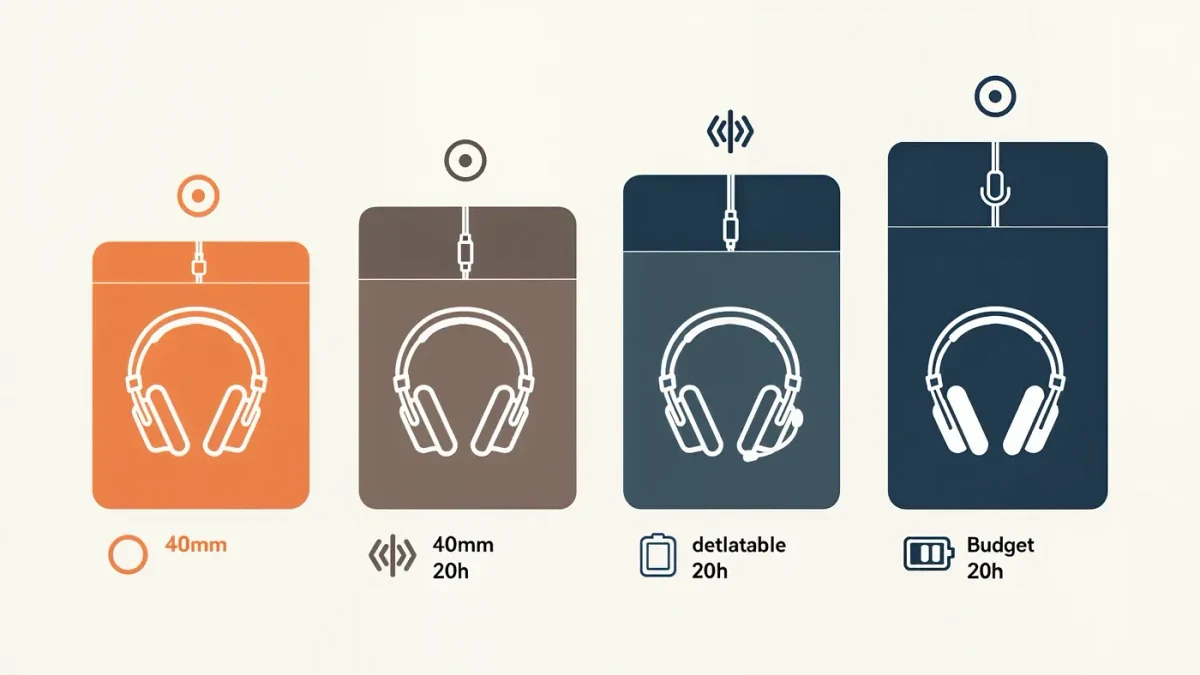
A gaming headset under $100 in 2026 buys genuinely good sound: established brands ship comfortable, well-tuned wired headsets in the forty-to-eighty-dollar range, and competent wireless models now fit under the hundred-dollar line, a price that once meant hiss and dropouts. What the budget still does not reliably buy is quality microphones on wireless models and software that respects your system. This review explains the buying logic for 2026, breaks down the tiers, and identifies the specs worth paying for and the ones that only sound expensive.
Casino Game Guru publishes buying guidance as information; prices change often, so verify current listings before purchase.
What matters most in a budget gaming headset?
Four factors, in order of importance: comfort over long sessions, sound tuning suitable for games, microphone clarity, and build durability. Comfort leads because a headset is worn for hours; clamping force and ear-cup material decide whether a great-sounding set becomes unwearable. Sound tuning for gaming means clear mids, where footsteps and ability cues live, rather than the boosted bass that sells music headphones. A microphone that teammates can hear matters more than any surround marketing claim.
Wired or wireless under $100?
Wired, unless you have a specific reason otherwise. A wired headset in this range puts the entire budget into drivers and build, with no latency and no battery to degrade. Wireless under one hundred dollars is now viable, with 2.4 GHz dongles delivering stable low-latency audio and batteries lasting a full session, but the budget splits three ways between audio, radio, and battery, so sound quality per dollar is lower. The honest rule: wireless buys freedom of movement, wired buys sound.
Which features are worth paying extra for?
- Replaceable or at least detachable microphone booms; fixed mics are the first thing to break.
- Memory-foam ear cups with breathable fabric if you play in a warm room.
- Detachable cables on wired models; the cable is the most common point of failure.
- On-ear volume and mute controls, which you use every session.
Which features can you skip at this price?
Surround sound branding leads the skip list. Virtual surround is a software effect, and every major platform and most sound cards include it free; paying a premium for branded surround at this budget mostly pays for a logo. Skip RGB lighting, which adds cost and nothing audible. Skip software suites requiring accounts for basic equalizer control. And skip premium-branded tie-ins with specific games; they are tuning partnerships, not engineering.
How do the tiers compare?
| Tier | Price | Strengths | Trade-offs |
|---|---|---|---|
| Entry wired | $30-50 | Clean stereo, decent mic, durable basics | Plain sound, firm clamps |
| Mid wired | $50-80 | Better drivers, comfort, detachable mic | Few |
| Upper wired | $80-100 | Near-audiophile tuning, aluminum builds | Close to wired ceiling |
| Wireless budget | $70-100 | 2.4 GHz freedom, session battery life | Weaker mic, sound per dollar |
How should you test a headset after buying?
Use the return window with intention. First, a two-hour comfort session: pressure on the jaw and ears announces itself early. Second, test positional audio in a game you know, listening for whether enemy movement cues sit left and right distinctly. Third, record your own voice through the microphone in the chat app your group actually uses, not the vendor's demo, and play it back. Fourth, wear glasses if you do; arms pressing into ear pads is the most common comfort failure nobody reviews mention. Fitness-for-purpose claims and consumer electronics pricing trends, covered across retail reporting including Bloomberg, both reward checking whether a model is at a genuine discount or an inflated baseline.
Can a budget gaming headset double for music and calls?
Yes, and honestly that is the smartest way to buy one. The tuning split described above — clear mids for game audio rather than boosted bass — happens to be a tuning that serves dialogue, podcasts, and most music reasonably well. A mid-tier wired headset plugs into a phone or laptop with the same 3.5 mm jack, and a detachable microphone turns a gaming set into plain headphones for meetings in a second. Wireless models with Bluetooth make the same swap without a cable. The reverse rarely works as well: buying music headphones and adding a clip-on microphone costs more and loses on-ear volume controls and game-friendly tuning. If one device has to cover gaming, work calls, and listening, a mid wired gaming headset is the most flexible fifty to eighty dollars in audio — not the best at any one job, but the weakest at none.
What is the honest ceiling at this price?
A hundred dollars in 2026 buys a headset that will not hold back your gaming, full stop. What it may not buy is the last few percent of audio refinement, the premium materials feel, or a wireless mic worth streaming with, and dedicated streamers eventually buy a separate microphone anyway. The mature move is mid-tier wired plus discipline: the difference funds better games, and your ears, unlike your graphics card, will not need an upgrade path.