The console exclusive — a big game available on one machine and no other — used to be the reason to choose a platform, and PlayStation's steady run of them, from God of War Ragnarök to Astro Bot in 2024, is still Sony's clearest marketing weapon. But by 2026 the industry has visibly re-priced the strategy: Microsoft releases first-party games on PC day one and has, since 2024, brought titles like Sea of Thieves and Grounded to PlayStation and Switch; Sony ports its exclusives to PC after a delay measured in a year or more. The honest framing for a buyer in 2026: exclusives still exist, they still sell consoles, but far fewer of them are permanent, and that changes what a platform purchase actually locks in.
Why did exclusives exist at all?
Economics. A console maker subsidizes hardware early in a generation and earns the money back on software — so owning a game that forces a hardware purchase is worth more than the sales that game would make on rival platforms, provided your installed base is large enough. Sony's model for three decades: fund acclaimed single-player exclusives, sell 100-million-plus consoles, collect the royalty on every third-party game sold to that base. Nintendo's variant is stricter — its games effectively never appear elsewhere, which is why the Switch line's 150-million-unit run and the Switch 2's June 2025 launch library are inseparable from Mario and Zelda. The strategy only works if the exclusives are good enough to move hardware, which is why platforms spend acquisition money on studios — Microsoft's $68.7 billion Activision Blizzard deal closing in October 2023 being the largest bet ever placed on owning software.
What broke the old model?
Growth stopped. Console installed bases stopped expanding with each generation in the late 2010s, and the money moved to recurring revenue — subscriptions, microtransactions, and engagement measured across every screen a player owns. Microsoft's response, visible since 2020 and explicit since its 2024 multiplatform announcements, treats Game Pass and the Xbox network as the platform and the box as one client among several, PC and rival consoles included. The math is simple: a Call of Duty or Minecraft kept off PlayStation forfeits more revenue than it gains in console sales. Sony's PC ports follow the same logic with a time delay, protecting launch-window console sales while collecting a second, full-price window on Steam a year or two later.
What does the split look like in 2026?
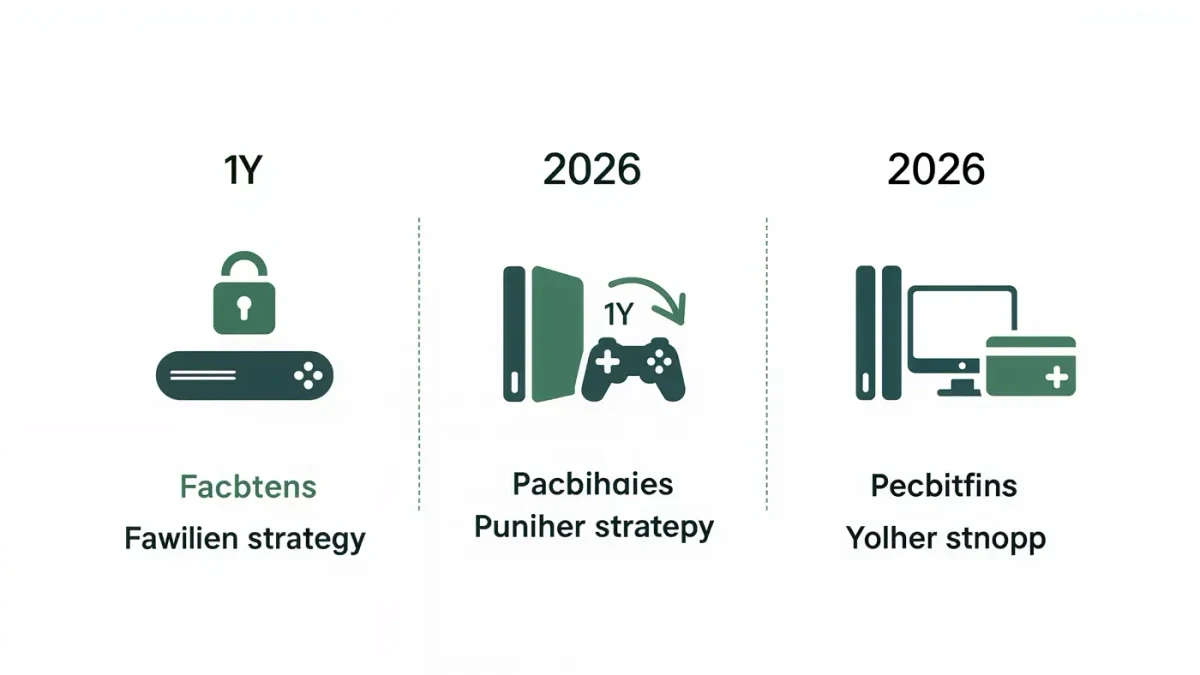
Three tiers of exclusivity. Permanent platform locks are now essentially Nintendo's alone — the only publisher whose major games never ship elsewhere. Timed or delayed exclusivity covers Sony: first-party titles launch on PS5, then reach PC after a long gap; a small number of third-party deals still buy PlayStation a year of exclusivity or content. Day-one multiplatform with subscription hooks is Microsoft's lane: same-day releases on Xbox, PC, and Game Pass, with select older titles spreading to rival consoles. For players, the practical reading of any "exclusive" headline is now a three-word question: exclusive for how long? The answer, since 2024, is usually "at least a year, often less forever than the announcement implied."
Do exclusives still decide which console to buy?
For two groups, yes. Nintendo's library is a genuine lock — there is no other way to play it, so the Switch 2 is a purchase its catalog forces. And players who want Sony's story-driven first-party games at launch, not a year later on PC, still need a PS5. For everyone else, the decision has quietly shifted to secondary factors: where your friends play, which subscription fits your habits, which controller you prefer, and which ecosystem already holds your library. An Xbox in 2026 is a way to access Game Pass and your existing library from the couch — a fine reason, but no longer a gate to exclusive software the way the Xbox 360 era was.
What should buyers take from the shift?
Buy the platform whose permanent exclusives you cannot live without — which in practice means Nintendo, and PlayStation if launch-day Sony games matter to you — and treat everything else as portable. Do not pay a hardware premium for timed exclusivity: if a game is announced for one console first, a PC version arriving later at a lower price is the norm, not the exception. And watch studio ownership rather than launch announcements: acquisitions like Activision Blizzard are the reliable signal of where a catalog will sit in five years, because ownership, not marketing, decides the long tail. The restructuring of the industry around subscriptions and multiplatform release strategies has been followed in detail by Reuters' technology coverage, and it is the single most consequential trend in the 2026 console market — more than any one machine's specs.
For most players, the practical question is simpler: check the release list for the hardware you already own, and let the exclusives argue among themselves.