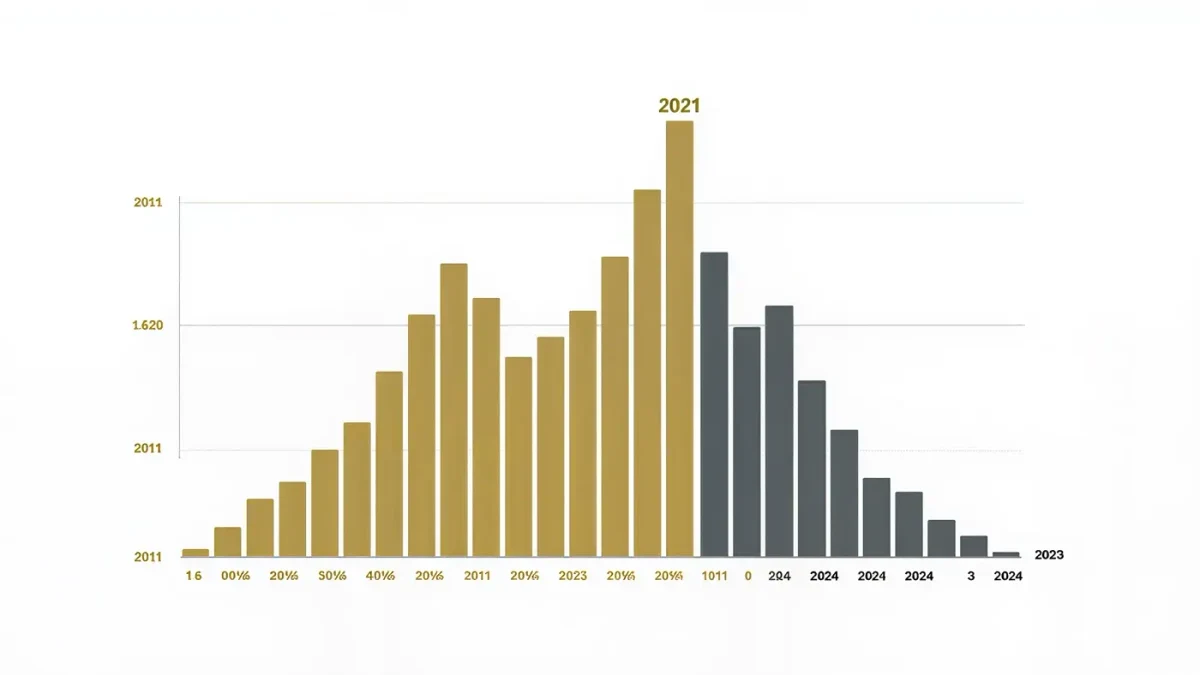
The International, Dota 2's annual world championship, holds the record for the largest prize pool in esports history: roughly $40 million in 2021, the tenth edition of the event. That number was not a gift from Valve — about 99 percent of it was crowdfunded by players buying that year's Battle Pass, with a share of every sale added to the pool. The same mechanism that built the record also deflated it: when Valve restructured how Dota 2 in-game sales feed the International, the pool dropped to around $3.3 million in 2023 and has stayed in that band since. The history of that number is really the history of one business model, from novelty to excess to correction.
How did the International start?
As a launch statement. Valve held the first International in August 2011 at Gamescom in Cologne, before Dota 2 was even publicly released, and put up a $1.6 million prize pool — an unheard-of sum for competitive gaming at the time — to announce the game and its esports ambitions in one move. The first championship was won by Ukrainian team Na'Vi, and the pool was funded entirely by Valve. It stayed at $1.6 million for the first two years, with the second International held in Seattle, near Valve's headquarters.
What was the Compendium and Battle Pass system?
The crowdfunding engine. In 2013 Valve introduced the Compendium, later renamed the Battle Pass: a seasonal in-game purchase that gave buyers cosmetics, predictions mini-games, and other rewards, while a quarter of each sale's price was added to that year's International prize pool. The effect was immediate — the 2013 pool roughly doubled to about $2.8 million during the funding window — and Valve leaned in, adding reward tiers that unlocked as the pool grew. Each year the community outspent the last: the pool passed $10 million in 2014, exceeded $20 million by 2016, and reached $34.3 million in 2019, then the record.
What was the peak, and who won it?
2021: about $40 million for the tenth International, still the all-time record for any esports event. Because of pandemic scheduling it was held in Bucharest without a live audience for most of the event. Team Spirit, a young Russian-based roster, won the championship and took home the largest single payout in the game's history, around $18.6 million for first place. The 2020 edition had been skipped entirely — the only year without an International — and its return produced both the record pool and one of the sport's great underdog stories.
Why did the prize pool collapse after 2021?
Because Valve deliberately stopped steering all spending toward one number. The 2022 pool fell to about $18.9 million, and in 2023 Valve changed the model: the Battle Pass was no longer a months-long funding drive for the International, and the standalone TI gem sales contributed only a small fraction. The 2023 pool landed near $3.3 million, roughly a tenth of the 2022 figure and under a hundredth of the peak. Valve's stated reasoning was that tying the game's main content season to one tournament's prize number had distorted the game's development priorities. The consequences rippled outward: team budgets built on TI-sized winnings had to be restructured, and the ecosystem shifted toward league and partner-event income — the same diversification other titles had already adopted. Reuters covered both the record years and the industry-wide pullback that followed them.
How is the prize money actually split?
By published placement percentages that Valve announces before each event. Historically the champions have received roughly 40 to 45 percent of the total pool, with shares declining steeply by placing — at the 2021 event, 18 teams were paid, and teams eliminated in the last places still received five-figure sums. The team's internal split between organization and players is contractual, and at the top organizations players have typically kept most of their winnings. The published split means a single placement difference of one round can be worth millions at the top of the table.
What does the history teach about esports economics?
That a record prize pool was a marketing artifact, not a wage system. The crowdfunding decade made Dota 2's championship famous for numbers no salary-based league could match, but the money arrived once a year, went to a handful of teams, and depended on players buying cosmetics — a funding source Valve could switch off, and did. The post-2023 International, with a pool closer to other titles' flagship events, is a more honest picture of the sport's underlying economics: sustainable incomes come from leagues, sponsors, and salaries, and spectacle-sized pools were always borrowed against a sales campaign. The International remains the game's biggest event; its prize history is the clearest single chart of esports' boom and correction.
For viewers, the lesson of that history is straightforward: the size of the prize pool tells you about the crowdfunding era, not about who will win.