Most big esports tournaments work like a pyramid. At the bottom, open qualifiers let virtually any registered team enter. Above them sit closed qualifiers with invited teams, then group or league stages, and finally a playoff bracket that produces the champion. Whether the game is League of Legends, Counter-Strike 2, Dota 2, or Valorant, that same basic structure repeats — what changes is who runs the pyramid, how many teams advance at each layer, and how the prize money is split.
Who actually runs an esports tournament?
One of three kinds of organizer. First, the game's publisher: Riot Games operates the competitive systems around League of Legends and Valorant, and Valve sanctions the Majors in Counter-Strike 2 and Dota 2 (though independent promoters run the events themselves). Second, independent tournament operators such as ESL FACEIT Group and BLAST, which license the right to run publisher-sanctioned events or host their own circuits. Third, third-party organizers running smaller online leagues and cups. The publisher always owns the game and the final say on rules; that is a structural difference from traditional sport, where no single company owns football.
What is an open qualifier, and can anyone enter?
In many cases, yes. Open qualifiers are online, free or nearly free to register for, and open to teams that meet basic requirements — usually a minimum rank, roster registration, and clean anticheat records. Matches run over a few days, single-elimination or double-elimination, until a set number of teams advance to a closed qualifier. This is the path amateur teams use to reach televised stages: every year, unknown rosters knock established organizations out of Majors through open qualifiers. Some circuits cap the open layer with rank requirements, so check the specific rulebook before registering.
How do group stages and Swiss formats differ?
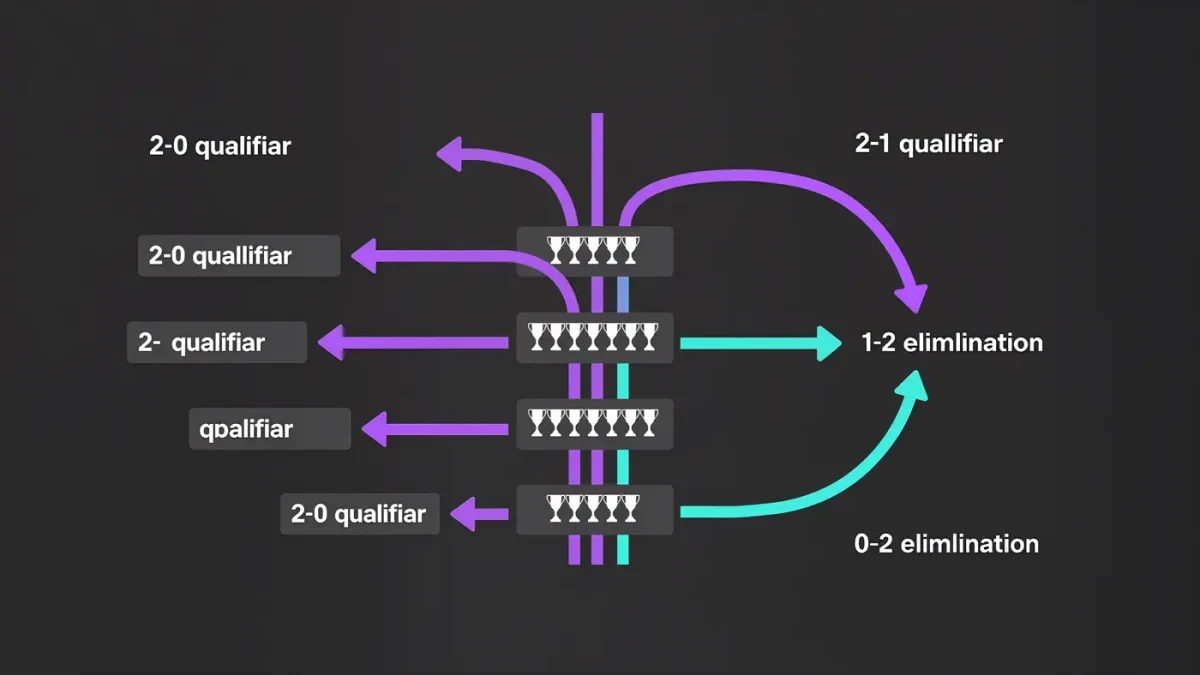
Both exist to cut a large field down to a playoff-sized bracket, and they trade time for fairness differently. Round-robin groups put teams in pools where everyone plays everyone; final records decide who advances. The Swiss system — used at Counter-Strike Majors since 2016 and at the League of Legends World Championship since 2023 — pairs teams against opponents with matching win-loss records over several rounds, and teams are eliminated after three losses or qualified after three wins. Swiss needs no pre-drawn groups and usually produces fewer fluke eliminations, which is why it has spread across titles.
Why are playoffs almost always single-elimination brackets?
Because they compress stakes into matches that are easy to follow. In a single-elimination bracket, one loss ends a team's tournament run, so every series carries the tension organizers want on a stage. Two losses and you are out is standard in the final stages of CS2 Majors and the Worlds knockout round. Matches this deep are usually best-of-three, with best-of-five reserved for semifinals or the grand final, which reduces the chance that one lucky map decides a title. The trade-off is honest: single-elimination brackets are dramatic, but they are not the most complete test — a team good enough to finish top four can still lose its first playoff match.
Where does the prize money come from?
Depends on the circuit. Publisher-funded events, like CS2 Majors with their $1.25 million base pool, put up a fixed amount from the publisher. Crowdfunded pools add community money: Dota 2's The International built record prize pools for years by selling a Battle Pass and adding a share of its sales to the pot, peaking with roughly $40 million in 2021. League-based circuits — the franchised leagues in League of Legends and Valorant — pay teams stipends and revenue shares instead, so the tournament prize is only one income stream among several. Major media outlets such as Reuters have covered both the growth and the later correction of esports prize money.
What are a Major, an International, and a Champions?
The flagship annual or twice-yearly events of the biggest circuits. A CS2 Major is Valve's world championship, held roughly twice a year since 2013. The International is Dota 2's annual championship, running since 2011. Worlds is the League of Legends world championship each autumn, and Champions is the year-end final of the Valorant Champions Tour. Each has its own qualification path — regional leagues, championship points, and last-chance qualifiers feed them — but all of them sit at the top of the same pyramid: open or league entry at the bottom, a global bracket at the top.
Do online and offline stages follow different rules?
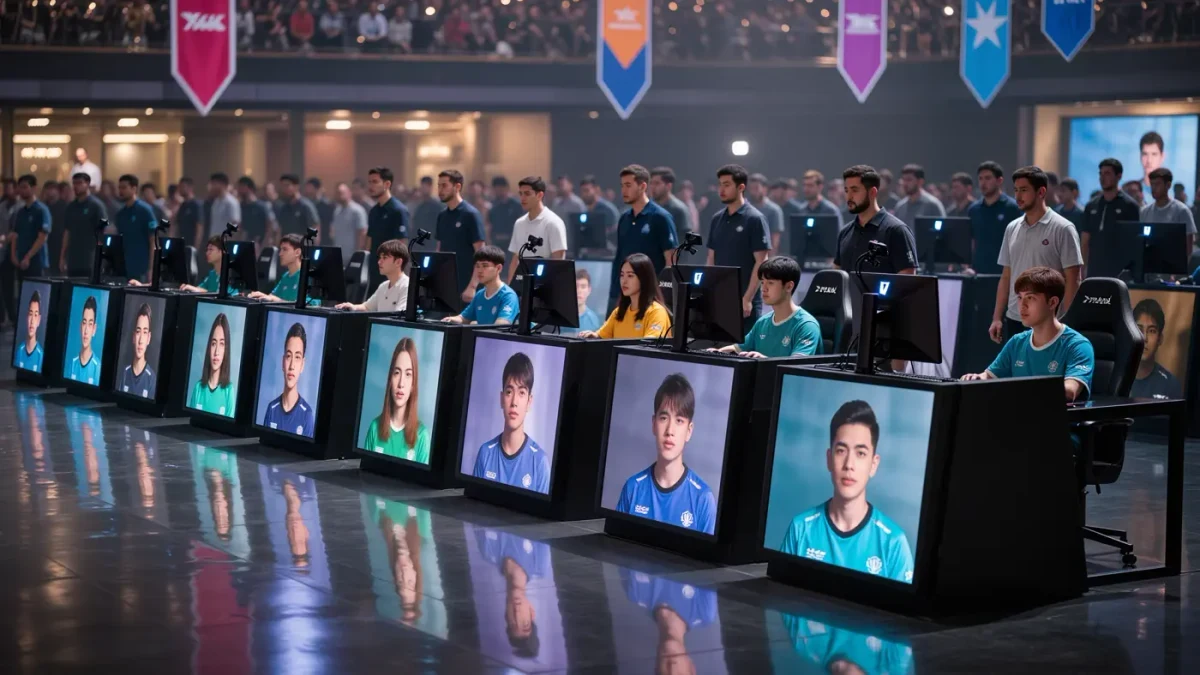
Yes, and the differences matter. Online stages are played from team facilities or homes, with anticheat software, match observers, and admin checks standing in for physical supervision. Offline stages — LAN events — put every player on identical tournament hardware, on a closed network, in the same hall. Latency disappears as a factor, and cheating becomes far harder, which is why titles are only decided on LAN in the top circuits. When a tournament description says LAN, it means the final layers of the pyramid are played in person, in an arena, in front of a crowd.